How to Choose the Perfect Everyday Carry (EDC) Wallet

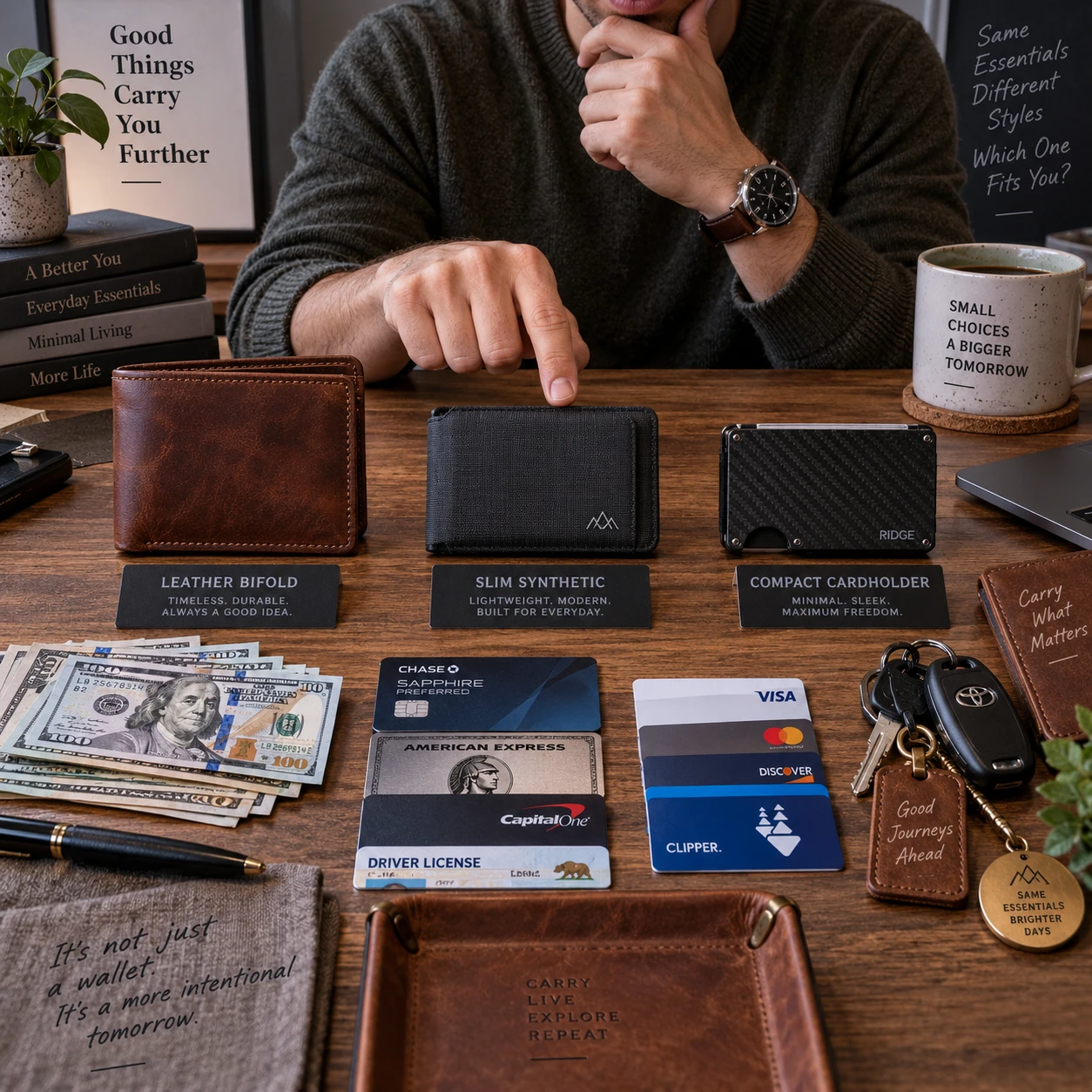
The perfect everyday carry (EDC) wallet is the one that keeps your essentials easy to reach without creating extra bulk or hassle. To choose well, start with what you actually carry, then compare wallet style, capacity, material, comfort, useful features, and price.
Start with what you carry every day
Choose an EDC wallet by counting the cards, cash, IDs, and other essentials you use in a typical week. Your real daily load, rather than the wallet’s advertised capacity, is the best starting point.
Take everything out of your current wallet and sort it into three groups: items you use daily, items you need occasionally, and items you can leave at home. A driver’s license, payment cards, transit pass, and a little cash may be daily essentials. Membership cards, old receipts, and backup cards often add bulk without helping during an ordinary day.
Keep the first group in your everyday wallet. Store occasional items elsewhere unless you need them for a specific routine, such as a work badge or medical information. This simple audit also reveals whether you need dedicated cash and card organization or a compact place for just a few cards.
- Cards: Count the ones you regularly use, including ID and access cards.
- Cash: Decide whether you carry bills often, rarely, or not at all.
- Other essentials: Include items such as a transit pass only if they belong in your wallet and are used regularly.
Be realistic about exceptions. If you often travel, handle expenses for work, or need several IDs, your everyday wallet may need more capacity than someone who mostly pays by phone. The aim is to carry what your routine requires without treating every possible scenario as a daily one.
Choose a wallet style that suits your routine
A bifold wallet usually offers more organization and cash space, while a slim wallet or cardholder reduces bulk for lighter loads. The right format depends on how much you carry and how you prefer to access it.
Bifold wallets fold in half and commonly include several card slots and a bill compartment. They suit people who carry cash, multiple cards, or a mix of everyday and work essentials. Their trade-off is thickness: a full bifold can press against you when carried in a front pocket or while seated.
Slim wallets are designed to reduce excess layers and may use compact pockets, a simple fold, or a small cash sleeve. They can make pocket carry more comfortable, though a very minimal design may require more shuffling to reach a particular card.
Cardholders work well when your daily load is mostly cards and a few folded bills. They are often easy to access and compact, but offer less separation and protection than a larger wallet. If you handle cash frequently, check how securely the design holds bills before choosing.
Think about where you carry the wallet, too. A back-pocket user may prefer a flat shape, while someone who uses a front pocket may value a narrow footprint. There is no universally best style; each trades capacity and organization against pocket comfort and ease of access.
Find the right size and capacity
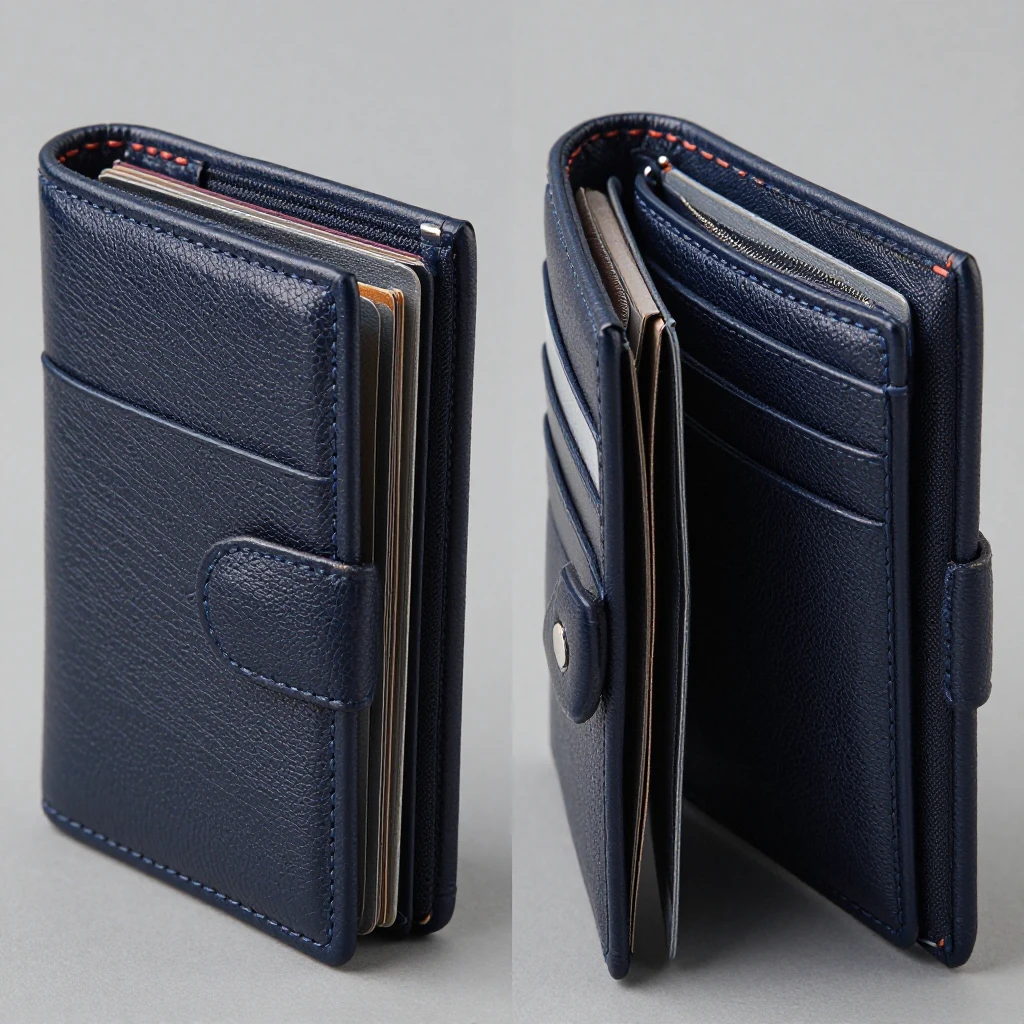
The right wallet capacity is enough for your regular essentials, with a little room to access them comfortably. Avoid choosing by maximum slot count alone, because a wallet that is full or overstuffed can become difficult to use.
Check the wallet’s dimensions and how it handles your actual items. Card slots that are too tight can make cards hard to remove; loose slots may let them slip out. If possible, look for a clear description of the intended capacity and whether the stated number assumes one card per slot.
A useful test is to load the wallet with your daily set and check three things:
- Access: Can you reach your main payment card and ID without removing several others?
- Closure: Does the wallet fold or fasten properly without forcing the contents?
- Comfort: Does it sit flat in your usual pocket when you stand, walk, and sit?
Keep some spare space if your routine changes, but don’t buy a much larger wallet for rare occasions. Carrying fewer cards can improve comfort and make cash and card organization easier. On the other hand, choosing a wallet with too little capacity may lead to loose cards or bills elsewhere, which defeats the purpose of an organized everyday carry.
Compare materials and construction
Wallet materials affect feel, appearance, durability, maintenance, and price. Leather often develops a distinctive surface over time, while synthetic materials can be lighter or easier to wipe clean, depending on their construction.
Leather is a common choice for its familiar feel and range of finishes. It can soften and show wear with use, which some owners appreciate; others may prefer a wallet that keeps a more uniform appearance. Leather generally benefits from being kept dry and cleaned gently, and some finishes need occasional conditioning. Quality varies, so inspect stitching, edges, lining, and slot construction rather than relying on the word leather alone.
Synthetic materials, including fabric and coated or molded options, vary widely. Some are lightweight, water-resistant, or simple to clean, but performance depends on the specific material and build. A low price can be appealing, though thin fabric, weak stitching, or poorly finished edges may wear sooner. Check product details and care instructions instead of assuming all synthetic wallets behave alike.
Construction matters as much as the surface. Look for even stitching, secure seams, smooth edges, and slots that hold cards without excessive force. A well-made wallet should suit how you use it; paying more for a material or finish you do not value may not improve your everyday experience.
Consider useful features without overcomplicating your choice
Useful wallet features solve a real problem in your routine, such as separating cash from cards or securing a small load. Extra compartments, closures, or RFID-blocking layers add value only when you will use them.
Start with organization. A separate bill compartment helps if you regularly carry cash, while distinct card slots make frequently used cards easier to find. A snap or zipper can help keep loose items contained, but closures can add bulk and another step when paying. For a simple cardholder, an extra mechanism may offer little benefit.
RFID-blocking wallets are designed to reduce certain types of radio-frequency communication with contactless cards. Whether that feature is worth choosing depends on your concerns and habits. It should not be treated as a guarantee against identity theft or a substitute for checking account activity and following your card issuer’s security guidance. If you are considering it, compare the wallet’s construction and claims rather than assuming every product offers the same protection.
Use a straightforward filter: identify a problem you encounter, then look for the feature that addresses it. If you never lose cash inside your wallet, a special cash-locking system may be unnecessary. If you carry only a few cards, a complex organizer can make a small load harder to manage.
Match the wallet to your budget and lifestyle
Set your wallet budget by weighing daily comfort, construction, and expected upkeep against the price. A wallet you carry comfortably and use every day may justify a higher cost, but a premium material or feature is not automatically a better fit.
Try the load, location, and longevity check. Load means the cards and cash you actually carry. Location means where the wallet sits and how that affects pocket comfort. Longevity means whether the material and construction suit your expected use and willingness to maintain it. If a wallet performs well on all three, its price is easier to judge.
For example, someone who carries four cards and rarely uses cash may prefer a simple cardholder with a low-profile shape. A person who carries cash, several IDs, and work cards may get more practical use from a bifold, even if it takes up more room. If you work outdoors or expect frequent exposure to moisture, compare care needs and material specifications before prioritizing appearance.
Common buying mistakes are easy to avoid:
- Buying for an imagined load: A high-capacity wallet can encourage unnecessary carry. Choose for your regular routine, not every unlikely exception.
- Ignoring pocket comfort: A wallet can look compact online yet feel awkward when full. Check loaded dimensions and think about how you sit and move.
- Paying for unused features: Extra compartments and RFID-blocking may raise the price without solving a problem you have. Decide which features matter before comparing models.
The best EDC wallet is a personal fit, not a particular style or material. A quick inventory, a realistic capacity check, and attention to where you carry it will narrow the choice far more reliably than buying the wallet with the most features.
Everyday carry wallet FAQs
Most wallet questions come down to how much you carry and what makes access comfortable. These quick answers can help you check your shortlist against common needs.
How many cards should an everyday wallet hold?
Choose capacity for the cards you use regularly, such as your ID, payment cards, and transit or access pass. Many people can streamline their wallet by removing expired, duplicate, or rarely used cards, but there is no ideal number for everyone.
Is a slim wallet better for everyday carry?
A slim wallet can be better if you carry few cards and prioritize a low-profile fit. It may be less convenient if you need several cards, frequent cash access, or dedicated organization. Test the loaded wallet in your usual pocket before deciding.
Do I need RFID-blocking in a wallet?
RFID-blocking is an optional feature for people who want to limit certain radio-frequency communication with contactless cards. It is not a complete security solution, so weigh the feature against your needs and review your card issuer’s guidance.
Which wallet material is easiest to maintain?
Some synthetic materials are easy to wipe clean, while leather may need gentler cleaning and occasional care. Maintenance varies by finish and construction, so follow the manufacturer’s care instructions for the specific wallet.