The Evolution of Smart Rings and Wearable Tech

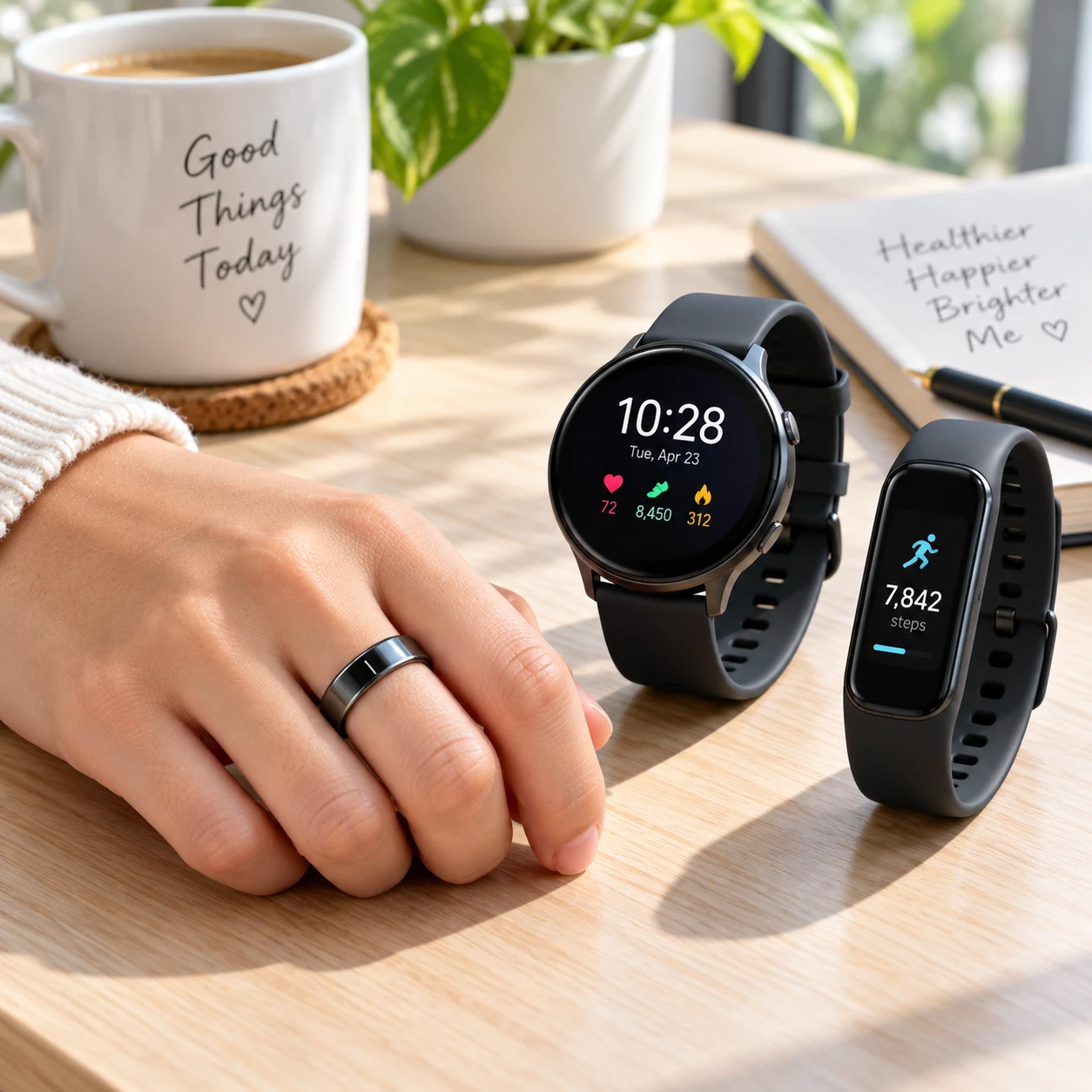
Wearable technology has shifted from gadgets that count steps to discreet accessories designed to collect information throughout the day. Smart rings reflect that change: they put sensors and health and activity tracking into a familiar piece of jewelry, with fewer visible controls than a smartwatch.
That small form comes with trade-offs. A ring may suit someone who wants passive tracking and a screen-free look, while a smartwatch is often better for on-wrist notifications, apps, and workout controls. Understanding how these products evolved helps shoppers decide which kind of wearable belongs in their routine.
From basic tracking to everyday wearables
Wearable technology has evolved from simple step counters into connected devices that can track activity, sleep, and other everyday patterns. The main shift is from occasional measurements to more continuous use, with comfort and convenience shaping product design.
Early fitness trackers made activity visible through basic counts such as steps and distance. As sensors became smaller and companion apps more capable, wearables began adding features such as heart-rate monitoring, sleep tracking, and smartphone notifications. Smartwatches expanded the idea further by adding screens, apps, and controls to the wrist.
Smart rings take a different route. They use the same broad trend toward miniaturized sensors but package the technology in a compact accessory, often without a display. This makes them less suited to checking live information at a glance, but potentially easier to wear unobtrusively during work, sleep, or formal occasions.
The evolution is not simply a race to add more features. A wearable that offers many functions can demand more attention, charging, and interaction. Products now compete on how naturally they fit into daily habits, as much as on what their sensors can measure.
Why smart rings have found a place in the market
Smart rings have found a place in the market because they offer tracking in a small, screen-free form. Their appeal is strongest for people who want a low-profile accessory that can stay on through ordinary activities, including sleep.
A ring is familiar and generally less visually prominent than a watch. It does not display messages or invite frequent tapping, which can make it a good fit for someone who wants data collected in the background rather than another screen to manage. Some people also prefer not to wear a watch at work, during sleep, or with particular outfits.
That convenience depends on fit. A ring has to sit securely enough for its sensors to work as intended, while remaining comfortable as fingers change size slightly with temperature, activity, and time of day. Trying on the sizing kit provided by a manufacturer, where available, is a more reliable approach than guessing from a jewelry size.
The screen-free design also sets expectations. Most smart rings rely on a phone app to show summaries, trends, and settings. If you want live workout stats or quick access to calls and messages, the same minimal design that makes a ring discreet may feel limiting.
What modern smart rings can do
Modern smart rings commonly support some combination of sleep tracking, activity tracking, and sensor-based wellness measurements. Exact features vary by model, so shoppers should check the specifications and app experience rather than assume every ring measures the same things.
Depending on the device, sensors may collect information such as movement, skin temperature trends, or heart-rate data. A companion app can use those readings to estimate sleep patterns, summarize activity, or show changes over time. These are consumer wellness tools, not diagnoses; unusual readings or health concerns should be discussed with a qualified clinician.
Some rings also support connected features, such as controlling a phone function or making contactless payments. Availability depends on the model, region, and supported services. Others focus more narrowly on recovery or sleep insights and offer little in the way of interaction beyond syncing with an app.
When comparing a ring, look beyond the number of metrics in the feature list. Ask how clearly the app explains its measurements, whether it gives useful context, and which features require a subscription. A long list of data points is only helpful if you understand what they mean and can use them consistently.
Smart rings versus smartwatches and fitness trackers
The main difference is form and interaction: smart rings prioritize discreet, passive tracking, while smartwatches and fitness trackers make information easier to see on the wrist. The right choice depends on whether you value subtlety, screen access, or a simpler activity-focused device.
- Smart rings: Compact and screen-free, they suit users who want background tracking and a jewelry-like accessory. They are less convenient for live stats and direct controls.
- Smartwatches: Their displays support notifications, apps, workout controls, and at-a-glance information. In return, they are more visible and may encourage more screen interaction.
- Fitness trackers: Often focused on activity and exercise, they can provide a more straightforward alternative to a full smartwatch. Design, tracking features, and battery life vary widely.
For example, a runner who checks pace during a workout may prefer a smartwatch or a tracker with a clear display. Someone who mainly wants overnight sleep tracking and a daily activity summary may find a ring easier to wear. Neither format is automatically more accurate in every situation; sensor placement, fit, software, and the activity being measured all matter.
There is also a practical visibility difference. A watch can show what it is doing, while a ring usually asks you to open an app later. That makes the ring less distracting for some routines, but also less useful when immediate feedback matters.
The trade-offs behind the convenience
Smart rings make tracking less visible, but their compact design brings limits around fit, battery life, interaction, and data privacy. Before buying, consider how the ring will feel during your real routine and how comfortable you are storing personal data in its app.
Fit and comfort: Fingers can swell or feel tighter in heat, during exercise, or overnight. A ring that feels fine for a brief try-on may become uncomfortable after hours of wear. Check sizing guidance and the return policy, and avoid choosing a fit that restricts movement or causes discomfort.
Battery life and charging: Battery life differs by product and use, and frequent syncing or enabled features may affect it. A small ring also cannot offer the same display-based interactions as a watch. Check how charging works and whether the charging routine fits your habits before relying on continuous tracking.
Privacy and personal data: Health and activity tracking can involve sensitive information about sleep, movement, and bodily patterns. Review the manufacturer’s privacy policy and app settings: look for information about what is collected, how long it is retained, whether it is shared, and how to delete your account or data. A useful rule is to share only what you need for the features you actually use.
Feature limits: A ring may not suit every workout, hand activity, or preference. It can be harder to operate while moving, and a passive tracking summary may not replace a dedicated training interface. Choosing a discreet design means accepting fewer immediate controls.
What may shape the next phase of wearable tech
The next phase of wearable technology will likely focus on making devices more comfortable, useful, and clear about the data they collect. Improvements are possible, but specific future features should be treated as possibilities until manufacturers announce and verify them.
Smaller sensors and better software could support more personalized summaries, while improved battery design may reduce charging interruptions. Products may also become easier to combine: a ring could handle overnight tracking while a smartwatch manages workouts and notifications. Whether that combination is worthwhile depends on cost, compatibility, and whether the extra data changes any decisions.
Privacy is likely to remain a key part of product design. Shoppers may increasingly compare not only what a device measures, but where data is stored, what controls an app provides, and whether core features keep working without a paid plan. Clear explanations will matter more than impressive-sounding metrics.
For now, choose by routine rather than novelty. List the moments when you want a wearable to help, then decide whether you need a screen, workout controls, sleep tracking, or simply a comfortable way to review activity later. That simple check is more useful than buying the device with the longest feature list.
Smart ring questions, answered
Smart rings are compact wearables designed to collect selected activity or wellness data, but their usefulness depends on fit, features, and how you prefer to view information. These answers cover common questions shoppers ask before choosing one.
What is a smart ring used for?
A smart ring is commonly used for sleep and activity tracking, with some models offering additional sensor-based measurements or connected features. The exact functions vary, so check the model’s specifications and app requirements.
How is a smart ring different from a smartwatch?
A smart ring is smaller and usually screen-free, so it emphasizes passive tracking and discreet wear. A smartwatch offers a display for notifications, apps, and controls, but is more visible and interactive.
Are smart rings comfortable to wear all day?
They can be comfortable when correctly sized, but comfort varies by person and can change with temperature or activity. Use the manufacturer’s sizing guidance and test the fit for normal daily wear before committing.
What should shoppers consider before choosing one?
Compare fit, battery life, tracking features, app usability, subscription costs, privacy controls, and return terms. Choose a smart ring if discreet tracking matters most; consider a smartwatch or fitness tracker if you need live workout information or on-device controls.